



Choosing the right sofa size
6 October 2026
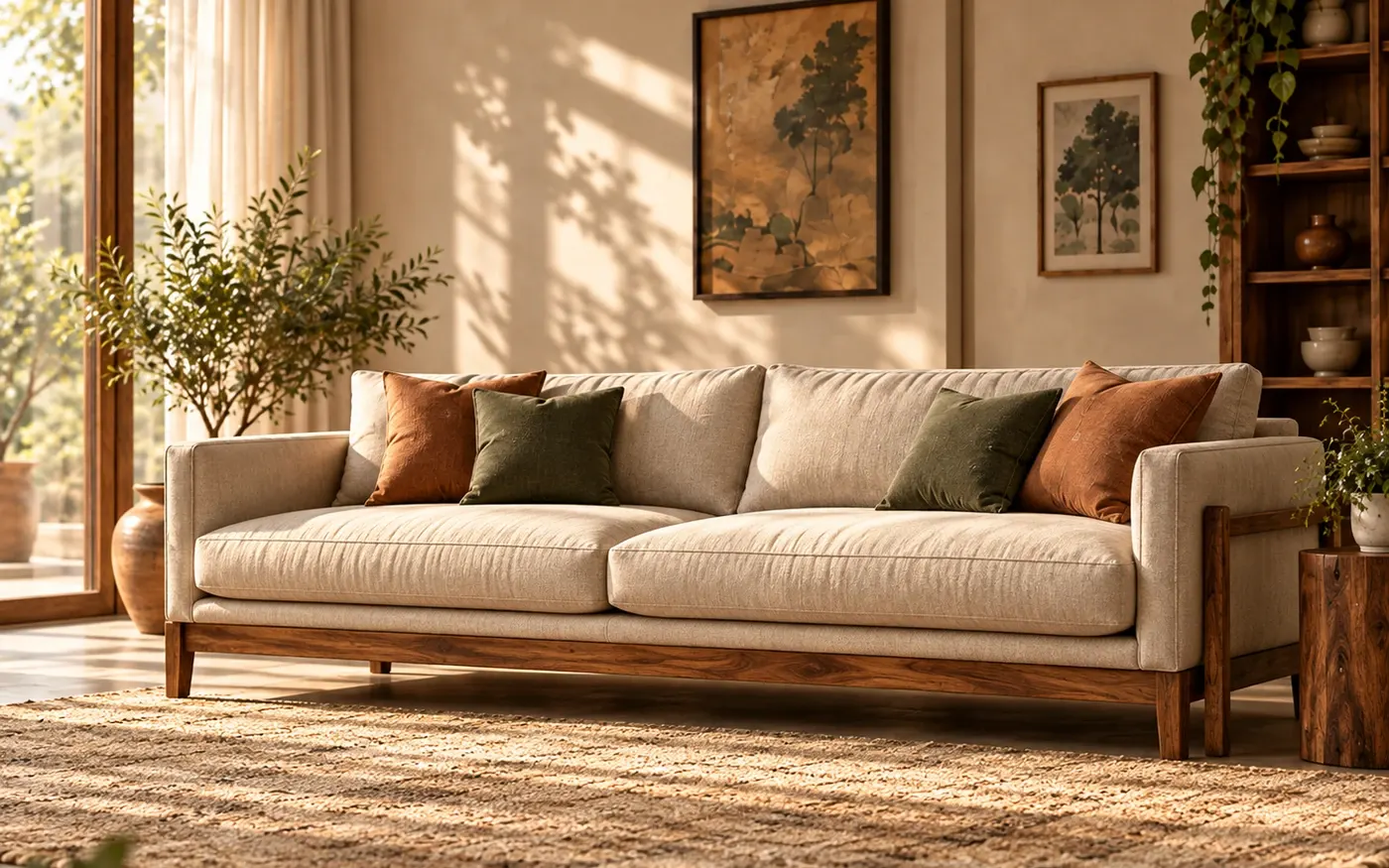
A sofa is usually the largest piece of furniture in a living room or lounge, and it is also the one people most often buy in the wrong size. Too big and the room feels cramped and hard to walk through; too small and it looks lost and does not seat the family. A few measurements taken before you shop solve almost every problem.
1. Start with the wall, not the sofa
Measure the wall the sofa will sit against. As a rule of thumb, a sofa looks balanced when it takes up roughly two-thirds of that wall, leaving space on either side for a side table, a lamp or simply some breathing room. On a 4.5-metre wall, that points you to a sofa of about 3 metres; on a 3-metre wall, closer to 2 metres.
2. Keep the walkways clear
Plan for about 75–90 cm (30–36 inches) of clear space wherever people walk regularly — between the sofa and a doorway, a dining table or the TV unit. Leave around 40–45 cm between the front of the sofa and the coffee table: close enough to reach a cup of chai, far enough to stretch your legs.
3. Decide how many people really sit there
- Two-seater: good for compact apartments, bedrooms and study corners.
- Three-seater: the everyday choice for most family lounges.
- L-shape or sectional: best when the family gathers in one room every evening, or when guests visit often — it seats more people in the same floor area, but needs a corner.
- Sofa plus chairs: a three-seater with two accent chairs is often more flexible for a formal drawing room than one very large sofa.
4. Check depth and seat height
Overall depth decides how far the sofa comes into the room. Deeper seats are wonderful for lounging but can feel awkward for elderly family members, who usually prefer a firmer seat at a standard height (around 43–48 cm) with arms they can push up from. If you like to sit cross-legged or put your feet up, a deeper seat is worth the extra floor space.
5. Measure the route into the room
The most common delivery problem is not the room — it is the way in. Measure the main door, any tight corners, the stairwell and the lift if you live in an apartment. Compare these with the sofa’s height and depth (a sofa is usually carried on its side). Our measurement guide shows exactly what to measure, and the delivery and assembly page explains how our team handles tight spaces.
6. Mark it on the floor before you order
Use masking tape or old newspapers to mark the sofa’s footprint on the floor and leave it for a day. Walk around it, open the doors, pull out the curtains. If anything feels tight, try the next size down — or ask about a made-to-measure piece.
When a standard size does not fit
Older houses, apartments and rooms with windows or radiators in awkward places often need something in between standard sizes. That is exactly what custom furniture is for: you share the room size and how you use it, and the piece is planned around your space. Or browse our sofas with these measurements in hand.